
I’ve been staring at this screen for hours, trying to conjure up something meaningful. But as I click away at my keyboard, I find myself wondering: is writing still worth it? With AI making rapid strides in generating text that’s almost indistinguishable from human writing, I’m starting to feel like I’m playing catch-up.
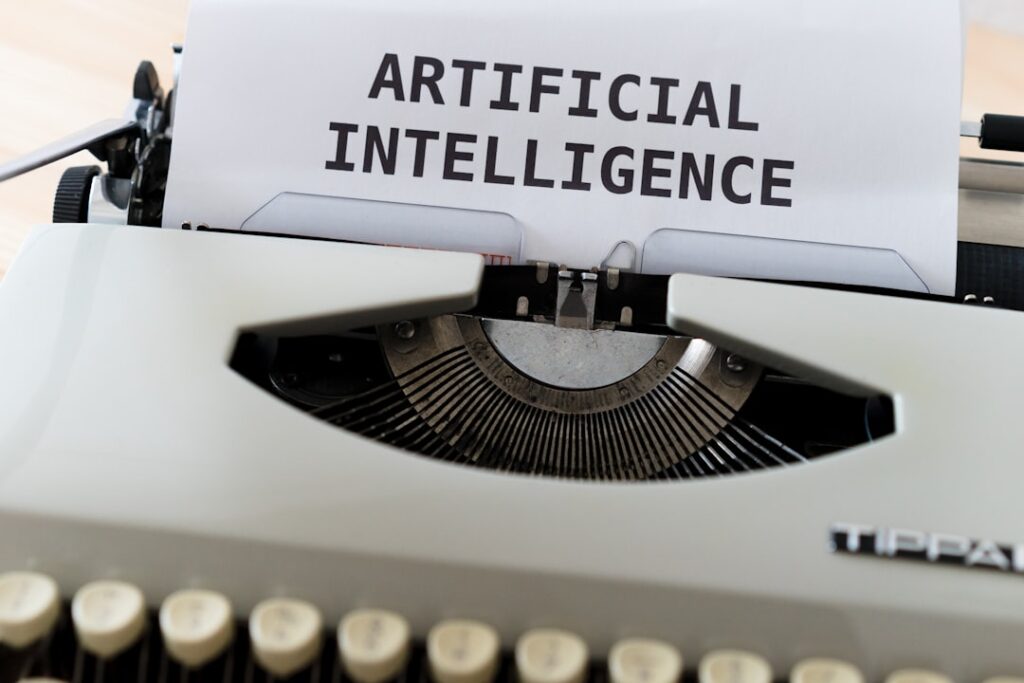
As a writer with over a decade of experience under my belt, I’ve seen the industry transform dramatically. From manual typewriters to digital tools and endless information at our fingertips, it’s been a wild ride. But despite all these advances, writing itself remains stubbornly human-centric.
That is, until AI came along and started churning out content with alarming speed. Language generators like Google’s Gemini are making waves, while content mills pump out article after article with nary a pause. It’s enough to make even the most seasoned author feel like they’re in over their head.
One tool I use regularly is Grammarly, it’s a lifesaver when it comes to grammar, syntax, and style suggestions. But as I’ve become more reliant on it, I’ve noticed something strange: my writing voice has begun to sound less distinct. My words are no longer mine alone; they’re been filtered through a machine’s lens, polished but also sterilized of their unique character.
This phenomenon isn’t limited to grammar checkers or AI-powered writing assistants. The rise of platforms like Medium and WordPress has given birth to the ‘content factory’ author, people who can churn out piece after piece with ease. These writers are adept at SEO keywords and catchy headlines, but their words rarely linger long in our minds.
Meanwhile, AI is forcing us to reexamine what it means to be a writer. Is writing just about producing content or conveying information? Or is it something more, a way of tapping into our deepest selves, exploring the human condition, and connecting with others on a profound level?
I’ve been thinking a lot about this lately, especially after talking to a friend who’s started using AI to generate chapters for her novel. She’s thrilled at how quickly she can produce new material, but worried about losing control over the story’s direction.
“It’s like having a partner,” she said, “but one that’s always trying to steer me in the wrong way.”
This sentiment resonates with many writers who’ve started experimenting with AI tools. While machines can certainly augment our abilities and speed up our work, they also risk reducing us to mere ‘co-creators’, participants in a collaborative process that’s no longer uniquely human.
But here’s the thing: even as AI continues to advance at breakneck pace, there are limits to its capabilities. Machines can’t replicate the nuances of human experience; they lack our capacity for empathy, imagination, and emotional depth. They can analyze data, recognize patterns, and generate text, but only up to a point.
When I think about this, I’m reminded of a scene from my favorite novel, The Particular Sadness of Lemon Cake by Aimee Bender. The protagonist has the ability to taste people’s emotions through food, it’s a metaphor for the kind of emotional resonance that writing should strive for.
As we navigate this uncertain future, I believe there are two possible paths forward: one that prioritizes efficiency and productivity above all else, or another that celebrates the unique value of human creativity. We can choose to see AI as a threat or an opportunity, a chance to augment our abilities, experiment with new forms of expression, and push the boundaries of what’s possible.
Or we can decide to resist the siren song of speed and perfection, embracing instead the imperfections, quirks, and idiosyncrasies that make us human. In this world, writing becomes not just a means of communication but an act of self-discovery, a way of exploring our own complexities, emotions, and experiences in order to connect with others on a deeper level.
The future is uncertain, but one thing’s clear: it will be written by both humans and machines. The question is, what kind of writing will we choose?